


What Is Dopamine Decor? The Case for Decorating in Color
Dopamine decor means choosing what goes in a room based on how it makes you feel standing in it. Not what a stager would pick. Not what the neighbors have. Color, pattern and texture selected because they do something for you every time you walk past.
The name travelled over from fashion, where dopamine dressing described the habit of reaching for the bright shirt on a grey morning. Interiors picked it up around 2023 and it stuck, mostly because it gave people permission to stop apologizing for liking color.
What separates it from the beige years
For most of the last decade, the default advice was to decorate neutral and add personality with accessories. Greige walls, white bedding, one sculptural vase. The logic was resale: keep it broad, offend nobody. It worked, in the sense that millions of living rooms now look like each other.
Dopamine decor starts from the opposite question. Instead of asking what a future buyer might tolerate, it asks what you actually want to look at. That single change explains most of what follows. Saturated color instead of muted. Pattern instead of plain. Objects you collected instead of objects that matched.
Dani Klarić, the Miami designer we built two collections with, puts it more bluntly than we would. "Forget about all of the decorating standards," she told Apartment Therapy during a tour of her own home. "We all deserve to live in a space that inspires us and makes us happy."
Where our version of it came from
Dani has close to two million followers across Instagram and TikTok, runs a design firm called Euphoria Collective, and describes her style as playful nostalgia crossed with contemporary maximalism. She has done wallpaper with Otto Studio and art prints with Desenio. In 2023 she came to us to make the textile version.
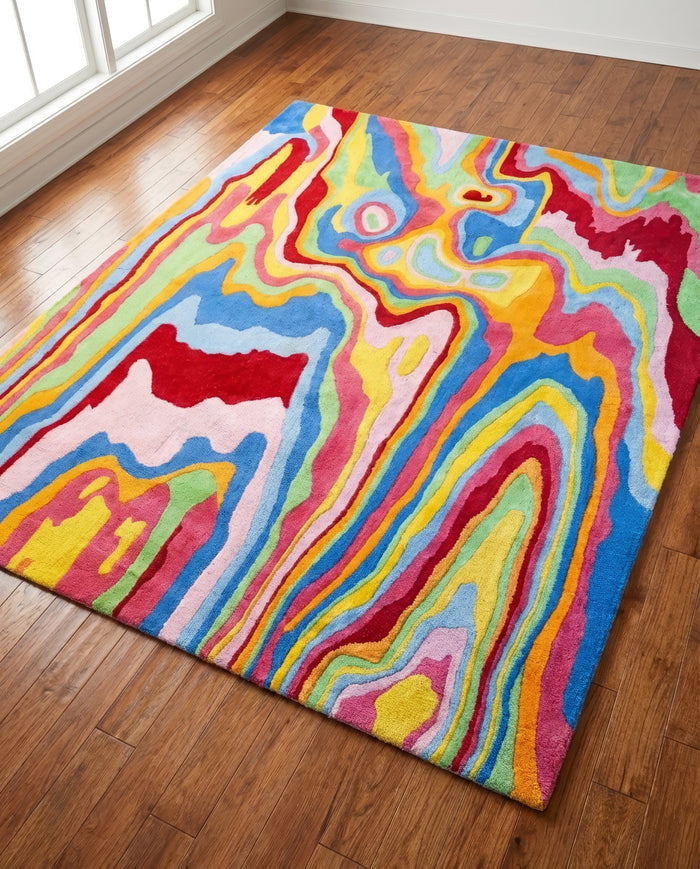
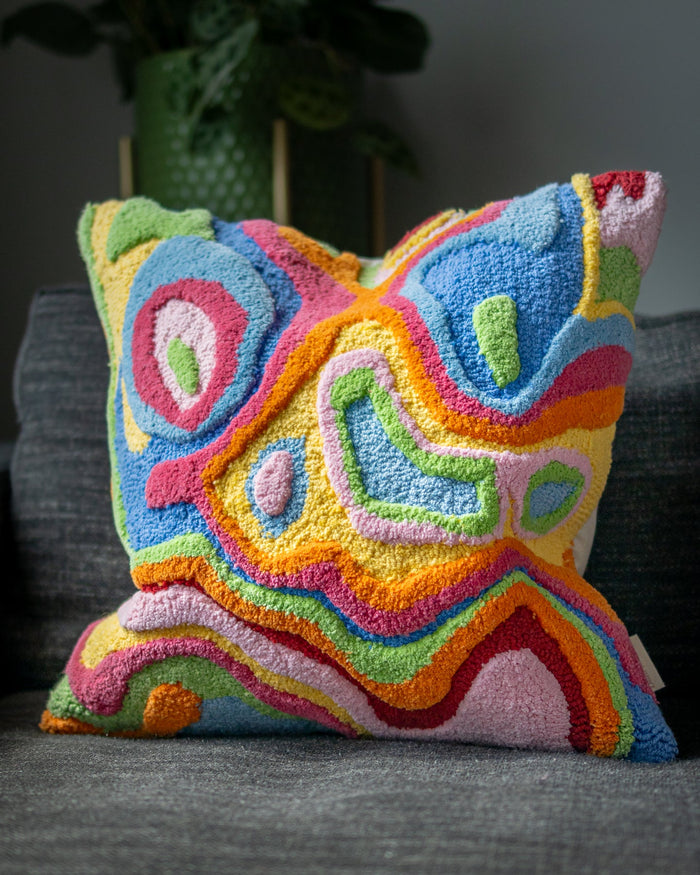
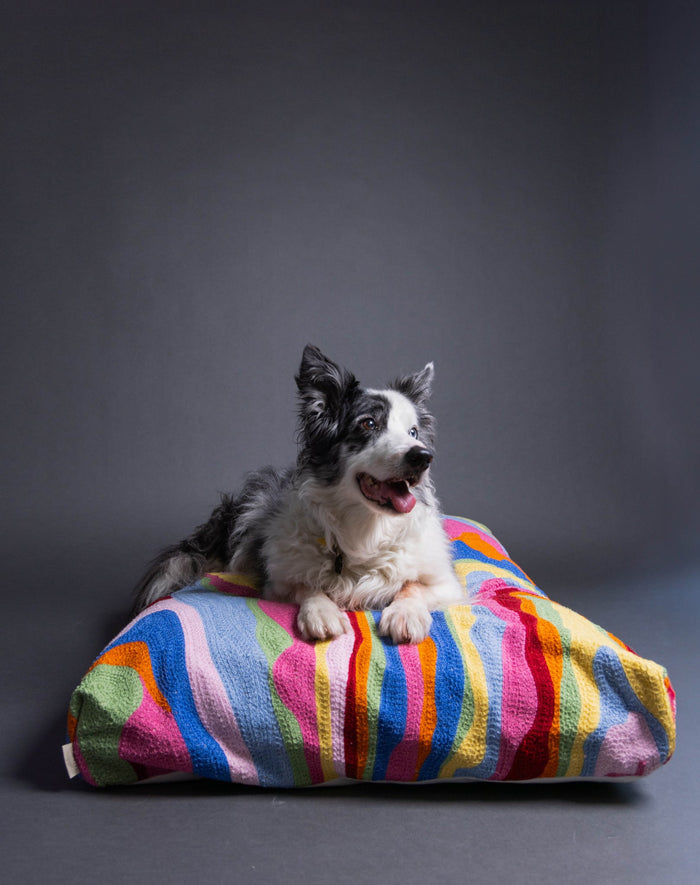
The pattern that came out of it is Bellows, and the origin is more specific than most collaborations get. Dani had hand-painted a film case for one of the Bellows Film Lab stores. The painting had bubblegum pink, periwinkle blue and light yellow moving through it in a way that looked like it wanted to be bigger. We translated it into a hand-tufted rug, then a pouf, a lumbar, a tapestry throw, a bathmat and, eventually, a dog bed.

That is the whole idea in one object. Somebody found a color combination that did something to them and wanted more of it, in more places, at a bigger scale.
Shop this look

Textiles are the cheapest way in
Almost every guide on this trend opens with paint. Color drench the walls, paint the trim to match, wallpaper the ceiling. Dani agrees, for what it is worth. "It's crazy how much a painted wall can change in a room," she has said. That advice is fine if you own your home and have a free weekend.
Textiles do a large share of the same work and undo in an afternoon. A hand-tufted rug carries as much color as an accent wall and covers roughly the same amount of visual space once it is on the floor. Throw pillows change the entire read of a sofa for the price of a nice dinner. A tapestry blanket over the arm of a chair adds a pattern you can move to the bedroom when you get tired of it.
Room by room
Living room. Start on the floor. The rug sets the palette and everything above it either agrees or argues. Front legs of the seating on the rug, which for a three-seat sofa and two chairs usually means eight by ten. Then five pillows on the sofa in two different sizes, and a throw over one arm.
Bedroom. The bedding is roughly thirty square feet of visible surface on a queen, more than anything else in the room. Put the color there and keep the walls quiet. A tapestry throw folded across the bottom third gives you pattern in a band you can pull off at night.
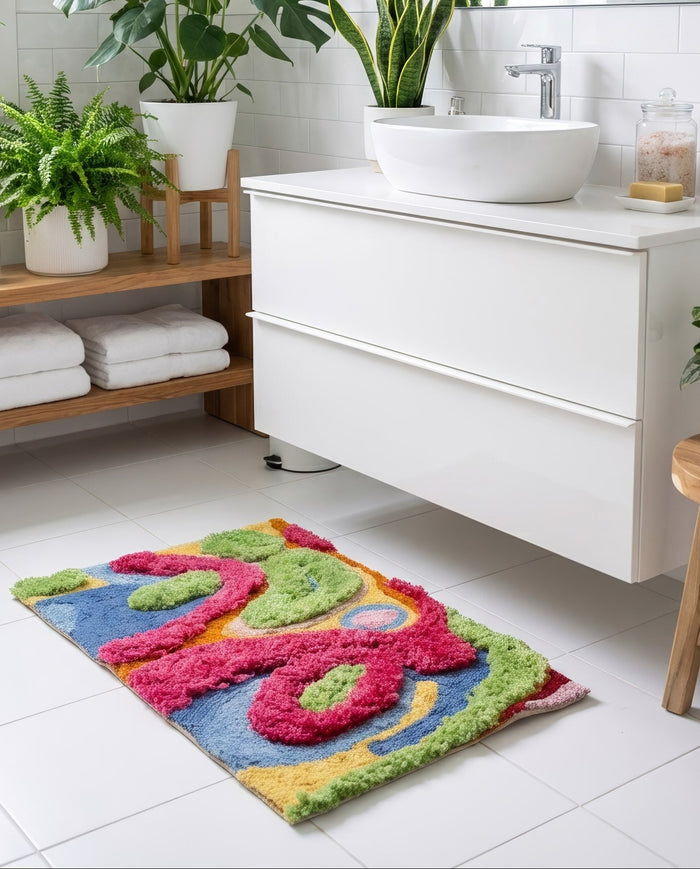
Bathroom. The most overlooked room for this, and the cheapest to change. A tufted bathmat in a real pattern does more for a rental bathroom than anything short of retiling, and it is the one piece of decor in the house that is already expected to be soft and washable.
Kids' rooms. Children pick color without worrying whether it is tasteful, which makes their rooms the most honest version of the style in any house. The constraint is washing. Anything on a child's floor or bed needs to survive a hot wash and keep its color.
The dog. Pet beds are where good rooms usually give up, because the options are grey, beige or a logo. A dog bed in the same pattern as the rug stops being the thing you hide behind a chair.
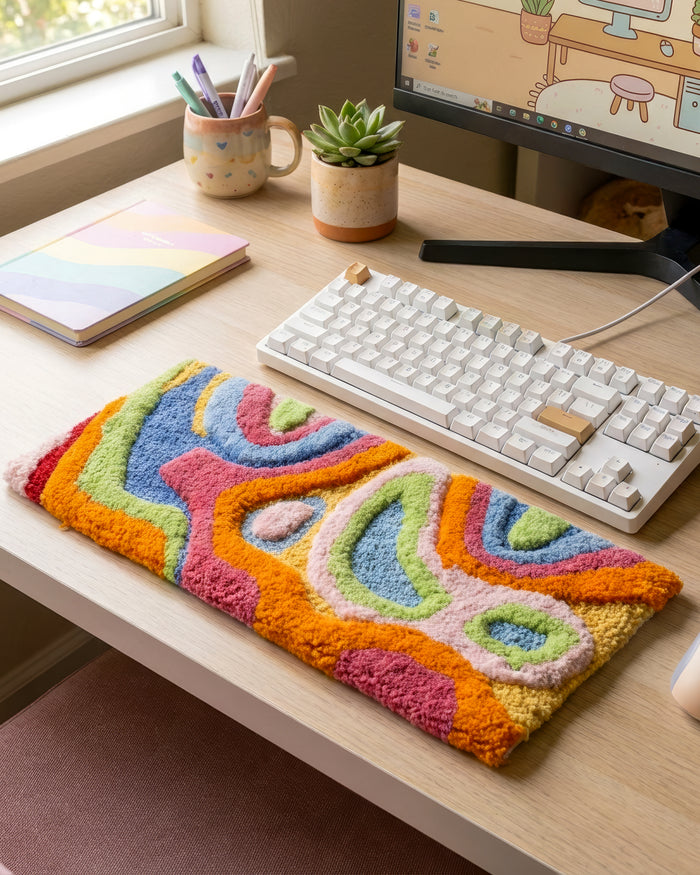
The desk. A small tufted mat under a laptop is a strange object until you have one, and then it is the thing everyone asks about on video calls.

Shop this look
Starting without wrecking the room
Pick the anchor first. One piece carrying most of the color, usually the largest thing you are willing to change. In a living room that is a rug. In a bedroom it is the duvet cover or a bed throw. In a small apartment it might be a single oversized lumbar pillow, which is a perfectly legitimate anchor when the room is 400 square feet.
Then repeat two colors from the anchor somewhere else in the room, at a smaller scale. A rust in the rug shows up again in a pillow across the room and in the spine of a book on the shelf. The repetition is what makes a colorful room read as intentional rather than accumulated. Skip it and you get a room where every object is shouting a different word.
Leave one large surface quiet. Sofa, walls, curtains, floor, pick one and let it stay neutral. Dani does this in her own living room, where a plain beige sectional sits under a pile of colored pillows and a turquoise coffee table. The eye needs a place to rest.
What it costs to start
A pillow cover and insert will run under a hundred dollars and change a sofa. A bathmat or a desk mat sits in the same range and changes a room nobody expects you to have decorated. A 5' x 7' hand-tufted rug is the first real commitment. An 8' x 10' is the piece that changes a whole living room, and it is priced accordingly.
If you have a few hundred dollars, buy pillows and a throw and live with them for a month before deciding whether you want the floor too. That order is cheaper than the reverse and it tells you something about your own tolerance for color before you spend the money that matters.
The part nobody mentions
Bright color has a materials problem. Getting a fiber to hold a strong dye usually means synthetic dyes, and a lot of colorful decor arrives in polyester with a finish on it. If you are the sort of person who reads labels on everything else in your house, that is worth knowing before you fill a room with it.
Ours is organic cotton and wool, dyed to OEKO-TEX limits for harmful substances. Our partners in India have been hand-tufting and hand-embroidering these pieces for years, which is also why the abstracts vary slightly from one rug to the next. We go into the dye question properly in how bright color actually gets made.
The mistakes we see most
Buying the safe version of a bold thing. Six months later it has blended into the beige it was supposed to fix, and the money is gone either way.
Using every color in the anchor at equal strength. If a rug is mostly cream with a lot of rust and a little cobalt, the room should hold those proportions, not average them out.
Filling the room in one order. There is no fix for a sofa buried under nine pillows except taking six of them off.
Is the trend going anywhere
Trends that ask you to buy a specific object tend to burn out with the object. This one asks you to stop deferring to resale value, which is a harder habit to reverse once you have tried it. Our guess is that the name fades and the behavior stays, the same way "farmhouse" stopped being a search term long after white shiplap stopped being controversial.
Either way the practical advice does not change. Buy the thing you keep looking at. Repeat its colors. Give your eye somewhere to rest.
The full range is in dopamine decor, and the pieces Dani designed with us are in the Dani Klarić x YaYa & Co. collection.
Keep reading
Dopamine Decor


Dopamine Decor
Color you can put down and take with you
Hand-tufted abstract rugs, embroidered throw pillows and tapestry blankets in organic cotton and wool.
Shop dopamine decor